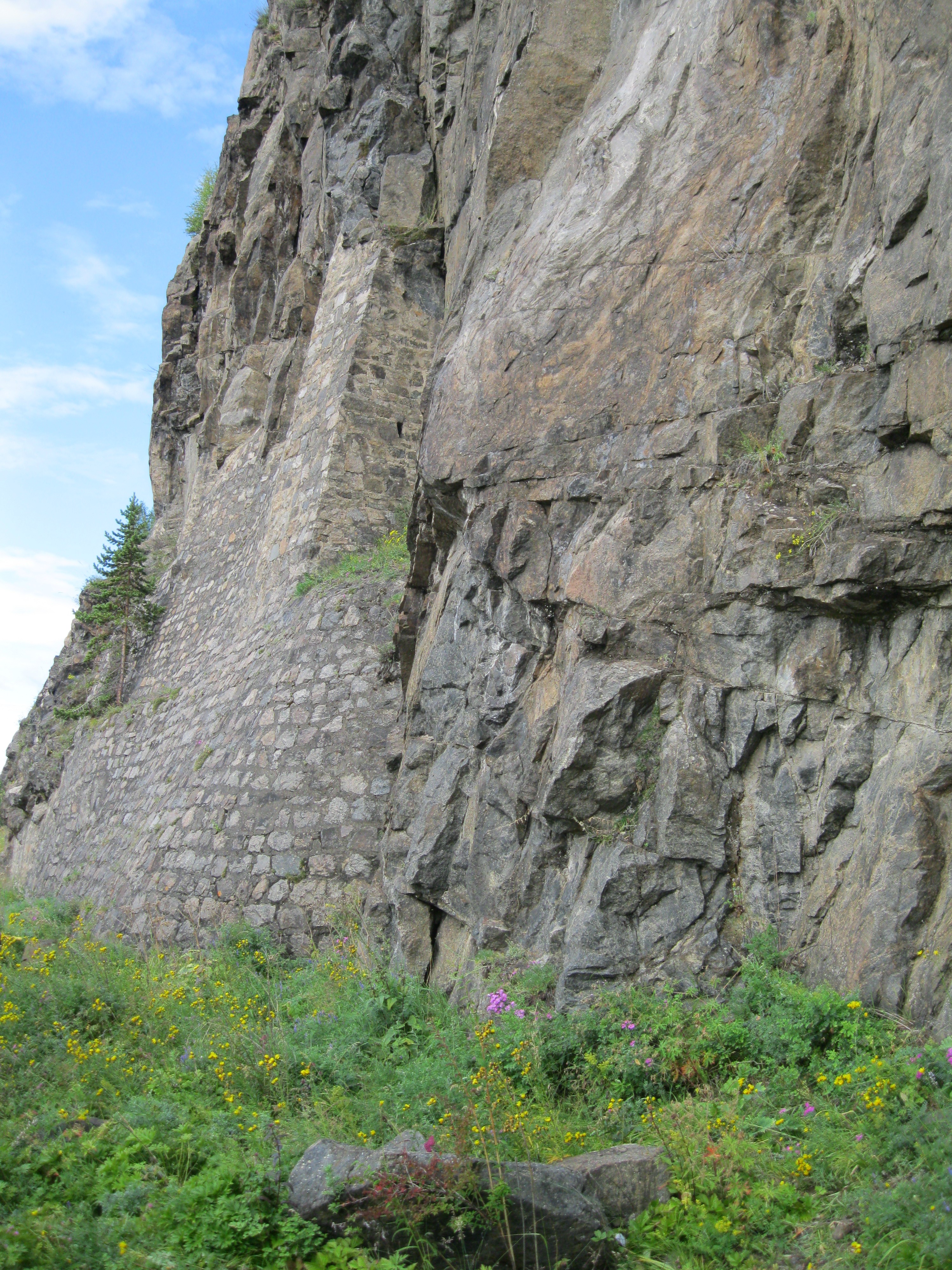
Two structural decisions determine whether a dry-stack wall remains plumb over multiple Canadian winters: how far the wall face is angled back into the hillside (the batter), and how deep the base course is set below grade to stay below the frost line. Both are straightforward to measure and execute; both are routinely skipped in casual garden wall construction, which is why so many walls begin leaning within three to five years.
What Batter Means
Batter refers to the inward slope of a wall face. A battered wall is not vertical; it leans back slightly toward the hill it is retaining. This backward lean shifts the centre of gravity of the wall mass toward the hillside, counteracting the outward push of retained soil. A vertical wall resists soil pressure with friction alone; a battered wall also uses the weight of its upper courses as a counterforce.
The standard batter ratio for a dry-stack retaining wall is approximately 1 inch of setback per 1 foot of height, which works out to 1:12. Some builders use a slightly more conservative 1:10. For a freestanding garden border wall under 600 mm tall, batter is optional but still useful for aesthetics and long-term stability.
Laying Out Batter Boards
The practical way to maintain consistent batter during construction is with a batter board—a straight length of wood cut to the wall's height with the top edge angled at the target batter. The board is held against the wall face periodically as courses go up. When the face of the wall aligns with the angled edge of the board, the batter is correct for that lift.
An alternative is to run a string from the base corner to a stake set at the finished top height, offset inward by the calculated batter distance. This method works well for long walls where a single batter board would need to be moved frequently.
Footing Depth and the Frost Line
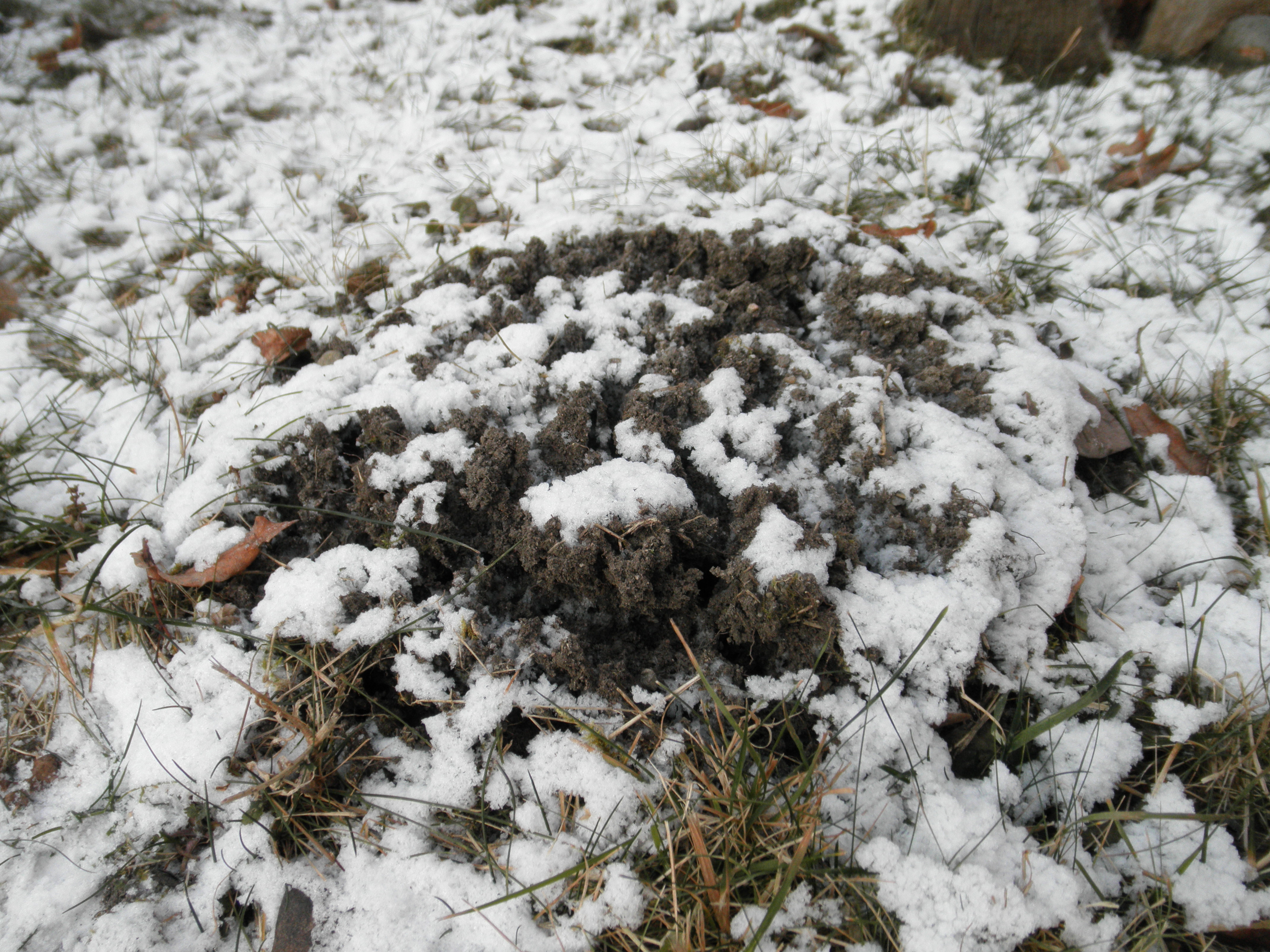
In most Canadian provinces, the ground freezes to a depth that varies significantly by region and year. Water expands roughly 9% in volume when it freezes; soil containing water does the same, pushing upward in a process called frost heaving. Any structure with a base that rests above the frost line is subject to vertical movement each winter and spring as the ground alternately freezes and thaws.
For a dry-stack wall, this movement does not destroy the wall outright—the mortarless construction accommodates minor movement better than a mortared wall would. However, repeated heaving gradually displaces base courses out of alignment, and after several cycles the cumulative shift becomes visible and structural.
| Province / Region | Typical Frost Depth | Minimum Footing Depth |
|---|---|---|
| Southern Ontario (Toronto area) | 600–900 mm | 900 mm |
| Eastern Ontario / Ottawa | 1000–1200 mm | 1200 mm |
| Southern Quebec (Montreal area) | 900–1200 mm | 1200 mm |
| British Columbia (Lower Mainland) | 150–300 mm | 300–450 mm |
| Alberta (Calgary area) | 900–1200 mm | 1200 mm |
These figures are general references; local building departments publish frost depth requirements specific to each municipality, and soil type modifies the effective depth. Saturated clay heaves more than well-drained sand at the same temperature, so clay soils warrant deeper footings even where frost penetration is relatively shallow.
Footing Construction for Dry-Stack Walls
Unlike poured concrete footings for structural walls, a dry-stack garden wall footing is typically a compacted gravel base or a set of large flat stones (often called hearting or base stones) set below grade. The excavation is dug to the required depth, any loose or disturbed soil is removed, and 150–300 mm of compacted gravel is placed as a bed before the first course of wall stone.
The first course—the base course—is the largest and flattest stones available. They should bear evenly on the gravel bed without rocking. Any rocking stone under a load is a pivot point for future movement; it should be shimmed with smaller flat stones until stable before the next course is laid.
Practical note: The base course is typically buried entirely below final grade. A wall described as 900 mm tall may have an additional 300–450 mm of base course below grade. This buried depth is not a waste of material; it is where the structural work happens.
Freeze-Thaw Cycle Effects on the Wall Face
Beyond footing movement, individual stones in the wall face are subject to freeze-thaw degradation. Water enters small cracks in porous stone, freezes, expands, and gradually spalls the stone surface. This is more pronounced in limestone and sandstone than in granite, which has lower porosity. After years of Canadian winters, softer stone may develop visible surface fractures or shed thin face layers.
The dry-stack form itself offers some resilience here: individual damaged stones can be removed and replaced without disturbing the rest of the wall. This is a structural advantage that mortared walls do not share—repointing or patching mortared joints requires specialized work, whereas a dry-stack repair is simply removing stones down to the damaged level and resetting them.
Wall Height and Structural Limits
Without engineering review, dry-stack retaining walls are generally considered appropriate up to approximately 900–1000 mm in exposed height. Above that threshold, the force from retained soil increases non-linearly, and the consequences of failure—displaced stone, eroded soil, potential injury—justify a structural review. Some provinces require a permit for retaining walls over 600 mm; checking with the local municipality before starting is straightforward.
Freestanding garden walls (not retaining soil) have different limits. A well-constructed dry-stack wall with proper batter can reach 1200–1500 mm in height as a freestanding border element, particularly if the base width is generous relative to the height—a base-to-height ratio of at least 1:3 is a common reference.